

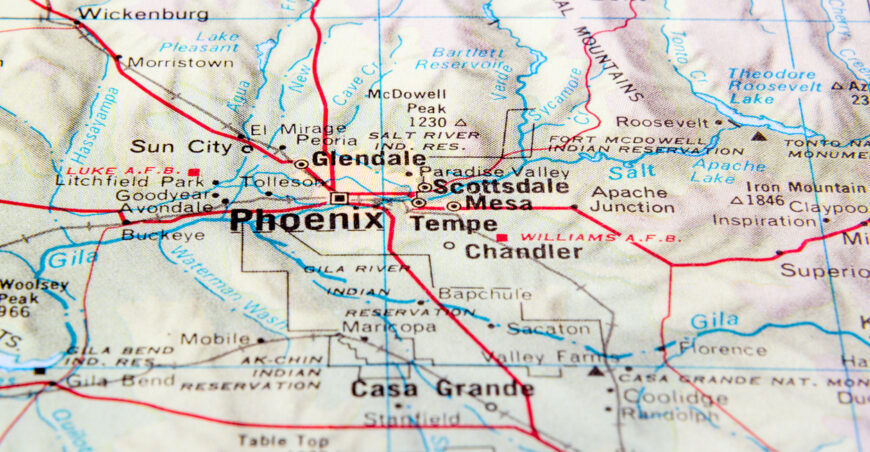
The Phoenix office market has gone through a major reset over the last few years. Remote work, rising interest rates, tenant downsizing, and changing workplace preferences forced investors to rethink what makes a good office investment. But heading into 2026, the conversation is changing. The office market is no longer just about survival. It is becoming about identifying the right submarkets and understanding where long-term demand still exists.
Three East Valley markets continue to stand out for office commercial real estate investors: Scottsdale, Tempe, and Mesa. Each submarket offers very different investment profiles, tenant bases, pricing structures, and long-term upside.
So where should investors focus in 2026?
The answer depends on investment strategy, risk tolerance, and the type of office asset being targeted.
Scottsdale: Premium Office Market with Strongest Pricing Power
Scottsdale continues to be viewed as one of the premier office submarkets in Arizona. Areas like Scottsdale Airpark and the Loop 101 corridor remain attractive to finance firms, wealth management groups, technology companies, and professional service tenants looking for high-end office environments.
One major trend continuing into 2026 is the “flight to quality.” Companies are downsizing overall footprints but upgrading into better buildings with modern amenities, strong parking ratios, and attractive locations. Scottsdale benefits heavily from this trend.
Class A office rents in Phoenix continue to rise, especially among trophy and amenity-rich assets. According to recent market reports from Colliers and Cushman & Wakefield, Scottsdale Airpark remained one of the strongest-performing office submarkets in metro Phoenix during early 2026.
Why Investors Like Scottsdale
- Higher average rental rates
- Strong executive and professional tenant base
- Better long-term liquidity for quality assets
- Higher barriers to entry for new construction
- Continued demand for premium office product
Challenges in Scottsdale
The downside is pricing. Scottsdale office assets often trade at significantly lower cap rates than other East Valley submarkets. Investors are paying a premium for stability and prestige.
Tenant expectations are also much higher. Buildings without updated common areas, fitness centers, conference facilities, or hospitality-driven amenities may struggle to compete. Older commodity office products in Scottsdale can still face leasing pressure if ownership is unwilling to reinvest capital into renovations.
For investors seeking stable long-term income with stronger tenant profiles, Scottsdale remains one of the safest office bets in Arizona. However, upside may be more limited because pricing already reflects much of that demand.
Tempe: The Growth and Innovation Market
If Scottsdale represents stability, Tempe represents growth.
Tempe continues to benefit from one of the strongest employment and talent pipelines in Arizona, driven largely by Arizona State University and the surrounding technology ecosystem. Large employers continue to target Tempe because of its younger workforce, walkability, transit access, and urban environment.
Recent market reports showed Tempe recording some of the highest positive office absorption numbers in metro Phoenix.
This is important because many office submarkets nationally are still struggling with negative absorption. Tempe’s ability to continue attracting tenants signals that companies still value well-located collaborative office space.
Why Investors Like Tempe
- Strong tenant demand from technology and innovation sectors
- Younger workforce demographics
- Strong leasing momentum
- Light rail connectivity and walkability
- Continued mixed-use development activity
Tempe also benefits from a more urban feel compared to traditional suburban office markets. Employees increasingly want office environments surrounded by restaurants, housing, entertainment, and retail. Tempe checks many of those boxes.
According to a recent article discussing the Phoenix office outlook, employers increasingly prioritize office locations that support collaboration, employee engagement, and convenience.
Challenges in Tempe
Tempe can also be more volatile.
Technology and startup-oriented tenants may be more sensitive to economic slowdowns. Leasing competition remains aggressive, and some investors are cautious about how hybrid work could continue impacting tenant footprints long term.
Parking constraints in certain urban locations can also create challenges compared to suburban office campuses.
Still, for investors looking for growth-oriented office opportunities with stronger appreciation potential, Tempe remains one of the most compelling office submarkets in Arizona.
Mesa: The Value and Healthcare Opportunity
Mesa may not receive as much national attention as Scottsdale or Tempe, but it continues evolving into one of the more interesting office investment markets in the Valley.
Mesa offers something many investors are searching for in 2026: value.
Compared to Scottsdale and Tempe, Mesa office properties generally trade at lower pricing per square foot and often provide higher cap rates. That creates opportunities for owner-users, medical office investors, and value-add buyers looking for upside.
Healthcare continues playing a major role in Mesa’s office demand story. The city has seen major healthcare expansion tied to hospitals, outpatient care, and specialty medical practices. Medical office demand remains strong across the East Valley as population growth continues pushing outward.
Why Investors Like Mesa
- Lower acquisition costs
- Higher yield opportunities
- Growing healthcare demand
- Strong population growth
- More owner-user opportunities
Mesa is especially attractive for investors targeting:
- Medical office buildings
- Smaller multi-tenant office assets
- Owner-user office condos
- Value-add repositioning opportunities
Infrastructure improvements and continued residential growth are also helping strengthen Mesa’s long-term fundamentals.
Challenges in Mesa
Mesa still faces perception challenges compared to Scottsdale and Tempe. Some office products are older and may require capital improvements to remain competitive.
Tenant demand can also vary significantly depending on location. Office assets near healthcare corridors or major freeway access points tend to outperform older isolated suburban office products.
Still, for investors prioritizing cash flow and basis over prestige, Mesa may offer some of the best risk-adjusted office opportunities in the Valley.
So Where Should You Buy in 2026?
There is no universal answer because each submarket serves a different investment strategy.
- Scottsdale fits investors seeking stability, stronger tenant quality, and long-term wealth preservation.
- Tempe fits investors looking for growth, innovation, and appreciation potential.
- Mesa fits investors searching for value, yield, and healthcare-driven office demand.
The broader Phoenix office market is slowly stabilizing as vacancy tightens; conversions remove obsolete inventory, and tenants continue prioritizing quality space.
The biggest mistake investors can make in 2026 is treating all office real estate the same. Office is no longer one category. Location, tenant profile, building quality, parking, amenities, and adaptability matter more now than ever before.
At the ICRE Investment Team, we continue tracking office and healthcare real estate trends across Scottsdale, Tempe, Mesa, and the broader Phoenix MSA. Whether you are evaluating an owner-user opportunity, a value-add acquisition, or a long-term investment strategy, understanding submarket dynamics has never been more important.
For more Phoenix commercial real estate insights, healthcare development trends, and investment opportunities, sign up for the ICRE Weekly Newsletter and stay ahead of the market.