

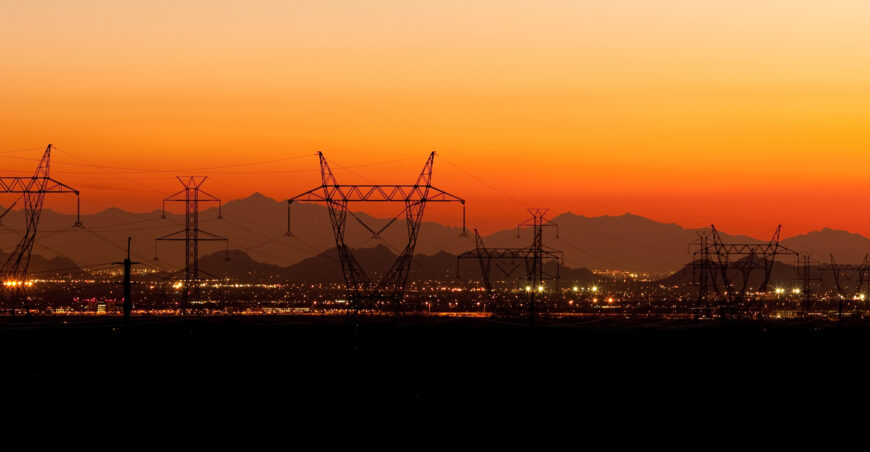
Phoenix data center development has turned the Valley into one of the most watched technology markets in North America, but the real constraint is no longer land, capital, or tenants. It is electricity, and the equipment needed to deliver it. Across Greater Phoenix, projects of every type are now waiting in the same line for switchgear, transformers, and utility service.
That changes the math for everyone who builds, buys, or leases commercial property here. A medical office building in Gilbert, a warehouse in Goodyear, and a hyperscale campus in Mesa all compete for the same electrical gear and the same utility engineering time. The winners in 2027 will be the owners who treat power as a site-selection input, not a line item.
Five things every Arizona investor, developer, and healthcare operator should know:
- Equipment lead times now drive schedules. Medium-voltage switchgear in Phoenix is running 52 to 80 weeks, and substation transformers 90 to 160 weeks.
- Utility demand is set to double. APS expects energy demand to double over the next 15 years, with data centers and large manufacturers driving most of the growth.
- Reserve margins are thin. APS and SRP ran with roughly 10% reserves at their 2026 peaks, below their 15% to 16% targets.
- Energized sites are worth more. Buildings and land with power already in place are becoming the scarcest product in the Valley.
- This is not just a data center story. Medical office, industrial, and multifamily projects face the same delays for transformers and service connections.
This article explains what is happening, how it affects Phoenix submarkets from Mesa to Buckeye, and how investors and tenants should respond.
Current Market Context
Nationally, data center demand is still outrunning supply. Vacancy in North America’s primary data center markets held at 1.4% in the first half of 2026, even with a record 7,481 MW under construction. More than 80% of that pipeline is already preleased, according to CBRE.
CBRE also notes that power constraints are stretching completion timelines. In other words, the industry has the tenants and the money. What it lacks is the ability to plug in fast enough.
The capital markets backdrop adds pressure. The Federal Reserve held its target range at 3.75% to 4.00% on October 28, and borrowing costs remain elevated. When construction loans carry higher rates, every extra month of waiting for a transformer adds real interest carry to a project.
Power Is the New Bottleneck: How Grid Constraints Are Delaying Phoenix Construction and Data Centers
The clearest picture of the problem comes from LGE Design Build’s Q3 2026 Construction Delivery Outlook. In Phoenix, medium-voltage switchgear lead times run 52 to 80 weeks. Pad-mount transformers for standard commercial and industrial buildings take 40 to 65 weeks. Substation transformers for hyperscale and utility projects take 90 to 160 weeks, meaning two to three years to energize a large site.
Those numbers matter because they are longer than most building schedules. A tilt-wall warehouse or a single-story medical office building can be framed and enclosed in well under a year. If the transformer takes 60 weeks, the building sits finished but dark.
Why Phoenix is feeling it more than most
Phoenix data center development is a big reason the queue is so long. Arizona has roughly two dozen operating data centers totaling more than 2,000 MW, and more than 10,600 MW more is planned, according to the Arizona Corporation Commission. Utilities report another 8 to 10 GW of speculative projects in their interconnection queues.
Data centers are already showing up in peak demand. On APS’s record peak day in July 2026, data centers drew up to 630 MW, nearly 7% of the system’s demand and about half of the year-over-year peak growth, according to KJZZ.
The utility response
APS’s latest integrated resource plan projects energy demand doubling over 15 years, from about 40,000 GWh to more than 80,000 GWh per year by 2041. About 76% of that growth is tied to data centers and large manufacturers such as TSMC. APS plans to add close to 4,000 MW of natural gas this decade, along with solar and 2,700 MW of battery storage.
In the near term, though, the grid is tight. At their latest peaks, APS and SRP operated with reserve margins of about 10%, below targets of 15% and 16%. APS has sought 8 GW of new capacity for 2031, with about 4.5 GW tied to data centers, and SRP plans about 2 GW for 10 data center customers.
For real estate, the takeaway is simple. New generation and transmission will come, but on a utility timeline measured in years. Projects that need new service before then are competing for a limited pool of equipment and engineering capacity.
Local Arizona Impact
Phoenix data center development is not slowing because of weak demand. CBRE reports the metro absorbed more than 260 MW of colocation space in the first half of 2026, with three more colocation projects scheduled for completion in the second half. Average lease terms run about seven years, which gives landlords long, bankable income.
Submarket by submarket
- Mesa and the Southeast Valley: The Elliot Road technology corridor near Phoenix-Mesa Gateway remains the center of hyperscale activity. Expect the most competition here for substation capacity and the longest lead times for large transformers.
- Chandler: Chandler’s established data center cluster and semiconductor base make existing powered buildings unusually valuable. Infill sites with service already in place command a premium.
- Goodyear and Buckeye: The West Valley is where the next wave of large campuses is landing, along with big-box industrial. Land is available, but new substations and transmission lines set the pace.
- Gilbert, Queen Creek, and San Tan Valley: These fast-growing healthcare markets need medical office and outpatient space. Smaller buildings use pad-mount transformers, and the 40 to 65 week wait applies to them too.
The medical office connection
This matters for healthcare real estate. Phoenix delivered no new medical office space for the second straight quarter, with only about 405,000 SF under construction, according to Kidder Mathews. Direct vacancy sits at 15.2%, but core East Valley submarkets are much tighter, including Tempe at 7.3% and Chandler at 11.6%.
When new medical buildings face long electrical lead times, existing, fully powered MOB inventory becomes harder to replace. That supports rents and values for owners in well-located submarkets.
Industrial and policy
Industrial is in the same queue. Phoenix has the nation’s second-largest industrial pipeline at 20.5 million SF, behind only Dallas-Fort Worth. JLL data shows Phoenix industrial vacancy near 9.5% and asking rents at a cycle-high $1.01 per SF per month.
State policy is also shifting. Arizona’s FY2027 budget pauses new data center sales-tax exemption applications from July 1, 2026, through June 30, 2029. That may cool some speculative proposals, but projects already in the pipeline will keep the demand for power high.
National Impact
The power bottleneck is national, and Phoenix is one of its front lines. CBRE says power constraints are extending completion timelines across the eight primary North American data center markets, and asking rents rose across every size category in the first half of 2026.
More than 24 states are now considering large-load tariffs or similar policies, according to the Arizona Corporation Commission. The question across the country is the same: who pays for the new generation and grid upgrades that data centers require?
Arizona’s answer is starting to take shape. SRP requires data centers to pay 60% of system upgrade costs before construction, and Arizona regulators agreed in April that large loads should pay for their own generation and infrastructure. That approach protects ratepayers but adds cost and time for every large project.
Key Risks
- Schedule slippage. A building that cannot be energized cannot be occupied. Late delivery can trigger lease termination rights, rent abatement, or loan covenant issues.
- Interest carry. With rates still elevated, each month of delay adds cost to construction loans and erodes projected returns.
- Utility rate increases. Large capital programs at APS and SRP could raise operating costs for all commercial users, which matters for net-lease tenants who pay utilities directly.
- Speculative land risk. Land bought on the assumption of future data center demand may sit idle if power cannot reach it for years.
- Reliability. Thin reserve margins during summer peaks raise the stakes for healthcare users who need uninterrupted power for imaging, surgery, and refrigeration.
Key Opportunities
- Powered shell buildings. Existing industrial and flex buildings with heavy power service are worth more than their replacement cost suggests.
- Existing medical office. With MOB deliveries stalled and new projects facing long electrical waits, stabilized medical buildings in Chandler, Tempe, Gilbert, and Mesa gain pricing power.
- Early procurement as a competitive edge. Developers who order switchgear and transformers before final approvals can deliver ahead of competitors and capture tenants.
- Supporting real estate. Data center growth creates demand for contractor yards, equipment storage, workforce housing, and service retail in the Southeast and West Valley.
- Repositioning. Older buildings with existing electrical capacity can be converted to higher-value uses faster than ground-up projects can be built.
The ICRE Perspective
What we are seeing in the field. The first question sophisticated buyers and tenants now ask is not price per square foot. It is how much power the building has and how fast more can be added. We are seeing healthcare operators pass on otherwise ideal sites because the utility timeline does not match their opening date.
What investors are missing. Many investors still treat power as a data center problem. It is not. A 15,000 SF medical office building in Queen Creek needs a transformer just like a hyperscale campus needs a substation, and both are drawing from the same constrained supply chain.
Opportunities that are emerging. Energized, well-located buildings are becoming a distinct asset class. Owners of existing medical and industrial property with ample electrical service should understand that capacity as part of their asset’s value when they refinance, sell, or negotiate renewals.
Risks being underestimated. Pro formas often assume a clean construction schedule. In today’s Phoenix market, underwriting without six to 12 months of electrical contingency is optimistic. Lenders are starting to notice.
Investor and Developer Takeaways
- Underwrite power first. Confirm available service, utility capacity, and equipment timelines before you sign an LOI on land or a development deal.
- Build in contingency. Add realistic schedule buffers for switchgear and transformers, and model the interest carry.
- Value existing capacity. Powered buildings deserve a premium. Price them accordingly whether you are buying or selling.
- Protect tenants in leases. Healthcare tenants should negotiate delivery dates, remedies, and backup power provisions tied to utility energization.
- Watch the West Valley and Southeast Valley. These corridors will see the biggest grid investment and the most supporting-use demand over the next five years.
Conclusion
Strategic takeaway: Phoenix data center development has made electricity the gatekeeper for nearly every type of commercial project in the Valley. Power availability now shapes schedules, values, and leasing outcomes as much as location does.
Future outlook: APS and SRP are building aggressively, and new generation will arrive later this decade. Until then, expect equipment lead times to stay long, energized sites to command premiums, and existing medical office and industrial buildings to benefit from limited new supply.
Action item: If you own, plan to build, or plan to lease in Greater Phoenix, get a clear read on the power situation at your site now, before it becomes the item that delays your next move.
How ICRE Can Help
At ICRE Investment Team, we specialize in helping investors, healthcare providers, and developers navigate the commercial real estate landscape — including tracking the Phoenix construction pipeline quarter by quarter. Whether you’re exploring your first medical office investment, evaluating a portfolio opportunity, or looking to understand how healthcare campuses fit into a broader CRE strategy, our team has the market knowledge and relationships to help you move forward with confidence.
Healthcare real estate is not a passive play. It requires the right guidance, the right location analysis, and the right understanding of tenant needs. That’s exactly what we bring to every transaction.
Ready to stay ahead of the market? Join thousands of investors and CRE professionals who get our latest insights, market updates, and investment opportunities delivered straight to their inbox.
Sign up for the ICRE Newsletter here →
Don’t miss the next opportunity — subscribe today and let the ICRE Investment Team be your guide in one of the most resilient and fast-growing sectors in commercial real estate.
Related reading: Q3 2026 – Phoenix Commercial Real Estate Market Report