

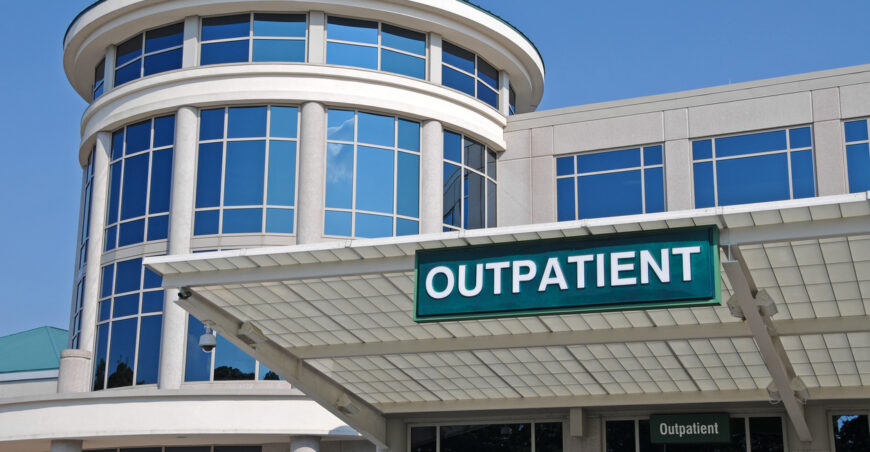
The healthcare industry is undergoing a quiet but powerful transformation, and if you’re in commercial real estate, you’re already feeling it. The shift from hospital-based care to outpatient delivery isn’t just a medical trend; it’s reshaping how, where, and why healthcare space is developed, leased, and invested in.
For investors, developers, and healthcare providers alike, this movement toward outpatient care is creating one of the most compelling opportunities in today’s market.
The Big Shift: From Hospital Beds to Neighborhood Care
Not long ago, hospitals were the center of nearly all healthcare activity. Today, that model is evolving. More procedures, consultations, and treatments are happening outside of traditional hospital settings—and closer to where people live.
Advancements in medical technology have made this possible. Minimally invasive procedures, improved diagnostics, and better outpatient surgical techniques are allowing patients to receive care without extended hospital stays. In fact, dozens of procedures have migrated to outpatient settings in recent years, contributing to a steady rise in outpatient visits while hospital admissions have declined.
At the same time, patients are demanding convenience. They want faster access, easier parking, shorter wait times, and locations near home or work. That demand is pushing healthcare providers to rethink their real estate strategies.
For a deeper dive into how medical real estate is evolving, check out this recent ICRE article: https://investingincre.com/2024/09/12/how-medical-real-estate-is-evolving/
Why Outpatient Real Estate Is Gaining Momentum
Several forces are converging to accelerate the outpatient shift, and each one directly impacts commercial real estate.
1. Demographics Are Driving Demand
The aging population is one of the biggest tailwinds. As more people enter the 65+ age bracket, healthcare utilization rises significantly. Older populations require more frequent visits, specialized care, and ongoing treatment, much of which can now be delivered in outpatient settings.
This isn’t a short-term trend. It’s a long-term demand driver that supports stable occupancy and consistent tenant demand for medical office buildings (MOBs).
2. Healthcare Is Becoming More Consumer-Focused
Healthcare is no longer just about treatment, it’s about experience.
Outpatient facilities are often designed with the patient in mind: smaller footprints, modern interiors, convenient locations, and faster service. As a result, providers are increasingly locating facilities in retail corridors, mixed-use developments, and suburban growth areas rather than on hospital campuses.
In fact, a significant majority of new outpatient facilities are being built away from hospitals and closer to residential communities.
This shift opens the door for retail-to-medical conversions and creates new demand for well-located commercial space. This trend is also fueling adaptive reuse opportunities.
3. Investors Are Following the Trend
Capital is flowing into outpatient healthcare real estate, and for good reason.
Transaction volume in outpatient healthcare properties has surged, with the asset class increasingly viewed as a standalone investment category with strong fundamentals.
Why investors like it:
- Long-term leases (often 7–10+ years)
- Creditworthy tenants (physician groups, health systems)
- Stable demand regardless of economic cycles
- Lower volatility compared to traditional office
Even in uncertain markets, healthcare real estate continues to outperform due to its necessity-driven demand.
4. Medical Office Is Outperforming Traditional Office
While traditional office space continues to face headwinds, medical office is telling a different story.
Medical outpatient properties have consistently traded at a premium compared to general office, reflecting stronger investor confidence, stable occupancy, and long-term demand.
At a time when office landlords are navigating vacancies and downsizing tenants, healthcare real estate offers a more resilient alternative.
What This Means for Development Strategy
The outpatient shift isn’t just influencing demand, it’s redefining how projects are designed and delivered.
Decentralization Is the New Model
Healthcare is moving into neighborhoods. Developers are now targeting high-growth suburban corridors, retail centers, and mixed-use environments where patients already live and shop.
Smaller, Smarter Buildings
Instead of large hospital campuses, we’re seeing:
- 20,000–40,000 SF medical office buildings
- Multi-tenant outpatient hubs
- Integrated healthcare campuses
Flexibility Is Key
Buildings need to accommodate a range of users, from primary care to specialists to ambulatory surgery centers (ASCs). That flexibility enhances long-term lease-up and exit value.
The Rise of the “Healthcare Ecosystem”
One of the most interesting developments is the emergence of healthcare clusters, multiple providers co-located within a single development or corridor.
These ecosystems create:
- Referral synergy between providers
- Higher patient convenience
- Increased tenant retention
- Stronger long-term asset value
For developers and investors, this model mirrors what retail mastered years ago: co-tenancy that drives traffic and performance.
Risks to Watch
While the outlook is strong, this sector isn’t without its challenges:
- Construction Costs: Rising costs can impact feasibility and timelines
- Regulatory Environment: Healthcare is highly regulated, affecting tenant operations
- Tenant Credit Quality: Not all medical tenants are created equal, underwriting matters
- Reimbursement Changes: Shifts in Medicare/insurance can impact provider stability
That said, compared to other asset classes, outpatient healthcare remains one of the more defensive and durable plays.
Where This Is Headed
Looking ahead, outpatient care isn’t slowing down; it’s accelerating.
Healthcare systems are actively restructuring their portfolios, focusing less on large hospitals and more on distributed outpatient networks.
At the same time, technology from telehealth to AI diagnostics is further enabling decentralized care delivery.
The result? Continued demand for well-located, modern outpatient facilities.
Opportunity Favors Those Who Understand the Shift
The transition to outpatient care is more than a trend, it’s a structural shift that is redefining healthcare delivery and commercial real estate strategy.
For investors, it offers stability.
For developers, it creates opportunities.
For tenants, it delivers efficiency and growth.
And for those paying attention, it presents a chance to get ahead of where the market is going, not where it’s been.
Stay Ahead with ICRE
At the ICRE Investment Team, we’re actively tracking and participating in this shift, advising healthcare providers, developers, and investors on how to position themselves in a rapidly evolving landscape.
From site selection and development strategy to investment acquisitions and leasing, our focus is helping clients capitalize on where healthcare real estate is heading next.
If you want to stay ahead of trends like this and gain access to market insights, off-market opportunities, and strategic analysis:
👉 Sign up for our newsletter: https://investingincre.com/newsletter-signup/
Stay ahead. Stay informed.