

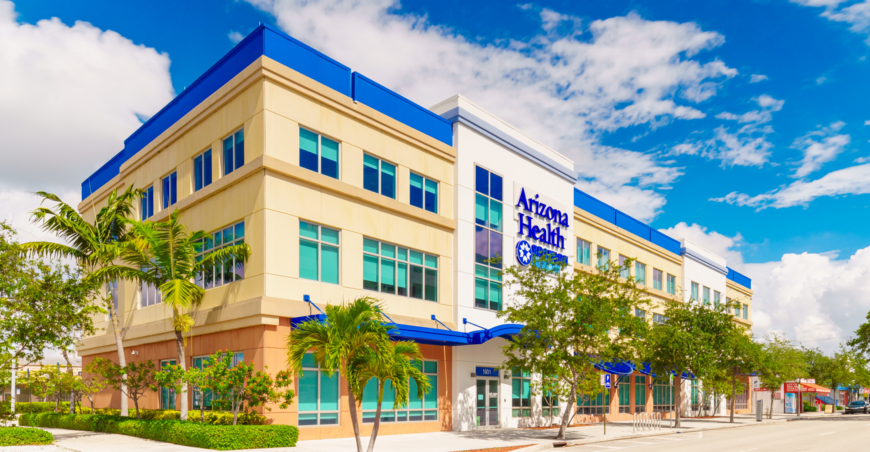
The way Americans access healthcare has changed. Walk into a modern mixed-use commercial real estate development today, and you might find a primary care clinic next to a pharmacy, a physical therapy studio above a café, and a specialist office sharing a parking structure with residential units. These aren’t coincidences; they’re the result of a deliberate shift in how developers, health systems, and investors are thinking about where healthcare gets delivered.
Mixed-use healthcare campuses are no longer a niche experiment. They’re quickly becoming one of the most compelling asset classes in commercial real estate.
What’s Driving the Shift?
For decades, the dominant model was simple: build a big hospital, put everything under one roof, and patients will come. That model worked — until it didn’t.
Today, healthcare systems are under pressure from every direction. Costs are rising; patients want convenience, and insurers are pushing providers to move care out of expensive inpatient settings whenever possible. The result? A massive migration of services toward outpatient and community-based care.
CBRE’s Q1 2026 Medical Outpatient Buildings report paints a striking picture of just how strong this demand has become: MOB investment volume surged 78% year-over-year to $2.9 billion in Q1 2026 alone, with average asking rents hitting a record high of $25.40 per square foot. Meanwhile, new construction completions are projected to drop 26% in 2026 to their lowest level in over a decade, meaning providers are competing for a shrinking pool of quality outpatient space. That supply-demand imbalance is pushing healthcare systems toward mixed-use developments and second-generation office conversions as cost-effective alternatives, bringing care directly into the communities where patients already live and work.
The numbers back this up. Medical outpatient building absorption reached approximately 19 million square feet across the top 100 U.S. markets in 2024, a 15% increase year over year. Asking rents are expected to rise around 1.8% in 2025 while vacancy continues to decline — a combination that signals strong, sustained demand.
The demographics are hard to ignore too. An aging population and the decentralization of healthcare delivery are increasing demand for medical office buildings, outpatient clinics, and life sciences research facilities. These properties benefit from long-term leases with creditworthy tenants that provide consistent cash flows, something traditional office landlords can only dream about right now.
Why Mixed-Use? Why Now?
Mixed-use development isn’t a new concept but pairing it specifically with healthcare is a relatively recent evolution, and the logic makes a lot of sense once you break it down.
For patients, it’s about convenience. Nobody wants to drive across town for a 15-minute appointment. When a clinic sits inside a walkable development with retail, dining, and parking, patients are far more likely to make (and keep) their appointments. Healthcare facilities in mixed-use settings benefit from higher foot traffic and visibility, shared parking and infrastructure, and onsite amenities that enhance the patient and staff experience.
For providers, the cost of math is compelling. Shared infrastructure like utilities, common areas, maintenance reduces the overhead that comes with standalone buildings. And being located near complementary services like pharmacies, labs, and wellness centers creates a built-in referral network that benefits everyone in the complex.
For developers and investors, mixed-use healthcare campuses offer something rare in today’s market: diversification. When you invest in mixed-use property, you access multiple tenant types — apartment residents, retailers, office occupants, healthcare providers, and service businesses. This broad tenant base means your investment doesn’t rely on any single market segment’s performance.
Healthcare tenants in particular are anchor stabilizers. They sign long leases (typically 7–10 years), they don’t relocate easily once their space is built out, and demand for their services doesn’t dry up during recessions. As ICRE’s own analysis points out, medical office vacancy remains steady around 9%, even through economic cycles – a stability that continues to draw investors toward medical assets as a reliable hedge against market fluctuations.
What These Campuses Actually Look Like
Mixed-use healthcare campuses come in many forms, but the best ones share a few common traits: they’re well-located near residential populations, they have a thoughtful tenant mix, and they’re designed with both patient experience and operational efficiency in mind.
Florida’s Lake Nona development is a frequently cited example — a community where medical, retail, and housing have been blended into a destination built around access, allowing providers to reach patients where they already live, work, and shop. In Arizona, the One Scottsdale Medical project, part of a larger mixed-use development, was 90% pre-leased before completion by three prominent healthcare providers, a testament to how strong demand can be when location and design align.
The same trend is playing out across the Phoenix metro area. Developments such as Mercy Vista Medical Center in Gilbert, Terraza Medical Village in San Tan Valley, and The Shoppes & Offices at San Tan Heights in Queen Creek are being designed to serve rapidly growing residential communities by combining healthcare, professional office, retail, and lifestyle-oriented amenities within a single campus environment. These projects recognize that patients increasingly value convenience, accessibility, and the ability to accomplish multiple tasks during a single visit.
The tenant mix matters enormously. The strongest campuses blend primary care, specialty services, diagnostics, and ancillary services like physical therapy and behavioral health — then layer in pharmacies, healthy dining options, fitness facilities, and professional services. As Colliers notes, the goal is a complementary ecosystem where medical tenants, retailers, and service providers enhance each other’s offerings, creating a destination that benefits both providers and the surrounding community.
Investment Considerations
Before jumping in, it’s worth understanding what makes healthcare real estate different from conventional commercial assets.
First, the buildout costs are higher. Medical tenants often require specialized layouts — lead-lined walls for imaging, surgical-grade HVAC systems, plumbing for clinical use. As the ICRE Investment Team has covered in depth, these specialized buildouts can be expensive upfront and potentially costly when tenants move out. Investors need to account for tenant improvement allowances carefully.
Second, the regulatory complexity is real. Healthcare is one of the most regulated industries in the country, and building owners need to understand zoning for medical use, HIPAA considerations, and local compliance requirements. Working with experienced brokers, attorneys, and property managers who know healthcare is essential — not optional.
Third, location is arguably the most critical factor. Medical office properties located near hospitals and major health systems benefit from built-in demand through referral networks and coordinated care models — and tenants in these locations are far less likely to relocate, creating longer lease terms and stronger renewal rates.
The U.S. healthcare real estate industry is expected to grow at a CAGR of 8.3% from 2026 to 2033, driven by private health systems expanding off-campus facilities, rising patient volumes, and mounting investment from REITs and private equity firms. For investors positioned correctly, this is a long runway.
The Bigger Picture
What’s happening with mixed-use healthcare campuses isn’t just a real estate trend — it’s a reflection of broader changes in how society organizes around health and wellness. People increasingly want to live, work, and get care in the same walkable, connected environments. Developers and health systems that understand this are building the infrastructure that communities will depend on for decades.
The ripple effects extend beyond the campuses themselves. Healthcare growth attracts ancillary tenants like law firms, tech companies, and support services, fueling local economic ecosystems. A well-designed healthcare campus doesn’t just serve patients — it becomes a neighborhood anchor.
How ICRE Can Help
At ICRE Investment Team, we specialize in helping investors, healthcare providers, and developers navigate the commercial real estate landscape — including the growing world of mixed-use healthcare assets. Whether you’re exploring your first medical office investment, evaluating a portfolio opportunity, or looking to understand how healthcare campuses fit into a broader CRE strategy, our team has the market knowledge and relationships to help you move forward with confidence.
Healthcare real estate is not a passive play. It requires the right guidance, the right location analysis, and the right understanding of tenant needs. That’s exactly what we bring to every transaction.
Ready to stay ahead of the market? Join thousands of investors and CRE professionals who get our latest insights, market updates, and investment opportunities delivered straight to their inbox.
Sign up for the ICRE Newsletter here →
Don’t miss the next opportunity — subscribe today and let the ICRE Investment Team be your guide in one of the most resilient and fast-growing sectors in commercial real estate.