

Introduction
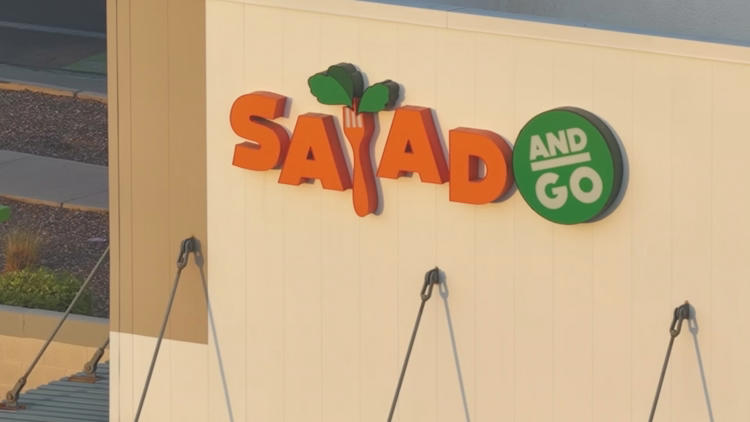
Net lease commercial real estate in Gilbert, AZ just went through a real-world stress test. On August 5, 2026, Salad and Go — the drive-thru salad chain founded in Gilbert in 2013 — served its last customers and closed every remaining location after filing for Chapter 11 bankruptcy. The company had already shuttered its Texas and Oklahoma stores earlier in the year, so the final wind-down was the last chapter of a fast unraveling.
For the East Valley, this hits close to home. Salad and Go was a hometown success story, and its little glass drive-thru boxes became a familiar sight on Arizona corners. But the more important lesson lives in the capital stack, not the menu — and it is a live case study in how single-tenant net lease pricing works when a corporate guarantee disappears. Here is what it means for investors, owners, and developers at a glance.
- Full shutdown. Salad and Go filed for Chapter 11 and closed all of its remaining Arizona and Nevada stores on August 5, 2026, after exiting Texas and Oklahoma earlier in the year.
- Built on net lease capital. The chain fueled its rapid growth by selling newly built drive-thru pads as corporate-guaranteed, 20-year absolute-NNN ground leases at aggressive, sub-5% cap rates during the 2021 to 2022 boom.
- The guarantee is now the risk. In bankruptcy, that corporate guarantee is effectively void. Owners are left holding dark, purpose-built drive-thru boxes that must be valued on real estate fundamentals, not credit.
- A double hit. Today’s higher cap-rate environment compounds the loss: overall single-tenant net lease cap rates sat near 6.82% in Q2 2026, well above the 2021 lows.
- Opportunity in the reset. For the East Valley, the fallout creates second-generation drive-thru opportunities for buyers and tenants who underwrite the dirt rather than the departed brand.
Current Market Context
To understand the impact on net lease commercial real estate in Gilbert, AZ, rewind to the last cycle. In 2021, investor appetite for single-tenant, drive-thru retail pushed quick-service restaurant (QSR) cap rates to a historic low of about 5.26%, with corporate-leased QSR product dipping toward 5.0% and premium brands pricing even tighter. A dedicated premium for a drive-thru component was baked into every deal.
Salad and Go rode that wave. It grew its footprint at a blistering pace — expanding its lease portfolio several hundred percent in just a few years — by selling its new-construction pads to net lease investors. The typical offering was a 20-year absolute-NNN ground lease, corporate-guaranteed, with roughly 10% rent increases every five years. To a yield-hungry buyer, that looked like a bond wrapped in real estate.
Salad and Go’s Collapse and the Future of Net Lease Commercial Real Estate in Gilbert, AZ
Here is the uncomfortable truth those aggressive cap rates were hiding: a low cap rate is the market pricing in low perceived risk. When a tenant with a 20-year guarantee sells at a 5% cap, the buyer is really buying the credit, not the corner. That works beautifully until the credit fails.
Chapter 11 changes everything. Bankruptcy lets a tenant reject its leases, which means the corporate guarantee that justified a sub-5% cap can evaporate almost overnight. Whoever bought one of these pads is now the owner of a dark, rent-free building. The asset instantly gets re-underwritten on real estate fundamentals — land value plus whatever the improvements are worth to the next user, minus the cost to re-tenant.
That re-underwriting is where net lease commercial real estate in Gilbert, AZ gets tricky. Salad and Go boxes are small and idiosyncratic: tiny footprints built for drive-thru-only service with no dining room. They do not convert cleanly into a full-size QSR, so the pool of ready backfill tenants is narrower than it looks. Meanwhile, the yield math has moved against these owners, too — overall single-tenant net lease cap rates rose to about 6.82% in the second quarter of 2026, with corporate QSR near 5.85%.
So the owner faces a double hit: the lost income from a defaulted guarantee and a repriced market that values whatever income remains at a higher cap rate. An asset bought at a 5 cap can realistically reprice 30% to 50% lower, depending on the quality of the underlying real estate. The buildings on hard corners with signals and strong traffic will find a new tenant. The ones sited to hit a growth target rather than for fundamentals may sit empty.
Local Arizona Impact: Why Gilbert Still Wins
The silver lining for net lease commercial real estate in Gilbert, AZ is the town’s own growth engine. Gilbert’s population reached roughly 291,713 in 2026, up from just 5,575 in 1980 and more than 134% since 2000 — growth faster than 96% of comparably sized U.S. cities. The U.S. Census Bureau confirms a young, high-income, fast-expanding base, and forecasts point toward roughly 297,000 residents as the decade continues.
That demand is showing up in bricks and mortar. Gilbert’s Office of Economic Development, an internationally accredited economic development organization, has championed a wave of new projects: the Heritage Park mixed-use development broke ground in 2025 at the gateway of the Heritage District, the 120,000-square-foot Melrose Professional Park added Class A medical and office condominiums, and a 101,000-square-foot speculative industrial building delivered in mid-2026.
Translation for investors: the rooftops, incomes, and daytime traffic that made these Salad and Go corners attractive in the first place have not gone anywhere. A vacant, well-located drive-thru pad in a town growing this fast is a re-tenanting opportunity, not a dead asset — provided you buy it at a price that reflects real estate, not a departed brand.
National Impact
Zoom out and the timing is telling. The broader net lease market has been softening as interest rates stayed higher for longer; cap rates ticked upward across property types in Q2 2026, and the Federal Reserve pulled its expected rate cut, changing the calculus for income investors. In that environment, buyers have far less tolerance for credit risk than they did in 2021.
Salad and Go is not the only growth concept that expanded on sale-leaseback capital, and it will not be the last to be tested. The national lesson is simple: single-tenant net lease is only as strong as the tenant, and “new and growing” is not the same as “durable.” The market is now rewarding proven credit and penalizing story stocks.
Key Risks
- Credit concentration. A single-tenant asset lives or dies with one company; a guarantee is only as good as the guarantor.
- Functional obsolescence. Purpose-built, drive-thru-only boxes have a limited backfill pool and often need capital to re-tenant.
- Cap-rate expansion. Higher-for-longer rates mean re-established income is valued at a higher cap rate than the original purchase.
- Site selection for growth, not fundamentals. Locations chosen to hit expansion targets rather than traffic and demographics are the hardest to backfill.
Key Opportunities
- Second-generation drive-thru pads. Coffee, beverage, and QSR operators actively hunt existing drive-thru infrastructure, which is expensive and slow to entitle new.
- Reset pricing. Distressed net lease resales let value-add buyers acquire good real estate at a discount to the last cycle’s pricing.
- Ground-lease reversion. Landlords who own only the land recapture the improvements at lease end and can re-lease the corner.
- Tenant-rep leverage. Growing local and regional brands can secure prime Gilbert corners on favorable terms during the reset.
The ICRE Perspective
Here is what we are seeing in the field across the East Valley. The investors who are nervous right now are the ones who bought the guarantee; the investors who are excited are the ones who always bought the corner. That distinction is everything.
What owners are missing is that a dark box on a great intersection in a booming town is not the same problem as a dark box on a marginal pad in a slow market. The first re-tenants; the second lingers. Net lease commercial real estate in Gilbert, AZ still benefits from some of the best demographics in the country, and disciplined buyers can turn this dislocation into a durable, well-located income stream. The mistake would be to paint every vacant pad with the same brush.
Investor Takeaways
- Price the real estate, not the guarantee. Underwrite land value, replacement cost, and realistic backfill rent, then treat any surviving credit as upside.
- Favor fundamentals. Hard corners, signalized intersections, and high traffic counts re-tenant; growth-target sites do not.
- Expect a rent reset. Model backfill at market, not at the old Salad and Go rent, and budget for tenant improvements.
- Respect the rate environment. With cap rates higher in 2026, buy at a basis that survives another leg of rate volatility.
- Move early. A cluster of former Salad and Go pads across Gilbert and the East Valley is about to hit the market at once — the best corners will clear first.
Conclusion
The strategic takeaway is that a cap rate is a risk price, not a promise. Salad and Go’s collapse did not break the fundamentals of Gilbert; it exposed the difference between buying credit and buying real estate. The owners who understood that distinction are positioned to win.
Looking ahead, expect a short window of dislocation as these pads come to market, followed by steady re-tenanting of the strongest locations by coffee, beverage, and QSR operators eager for existing drive-thru infrastructure. The action item is straightforward: if you own or want to own net lease commercial real estate in Gilbert, AZ, get a clear-eyed valuation of the real estate today, and be ready to act while pricing still reflects fear rather than fundamentals.
How ICRE Can Help
At ICRE Investment Team, we specialize in helping investors, healthcare providers, and developers navigate the commercial real estate landscape — including the growing world of mixed-use healthcare assets. Whether you’re exploring your first medical office investment, evaluating a portfolio opportunity, or looking to understand how healthcare campuses fit into a broader CRE strategy, our team has the market knowledge and relationships to help you move forward with confidence.
Healthcare real estate is not a passive play. It requires the right guidance, the right location analysis, and the right understanding of tenant needs. That’s exactly what we bring to every transaction.
Ready to stay ahead of the market? Join thousands of investors and CRE professionals who get our latest insights, market updates, and investment opportunities delivered straight to their inbox.
Sign up for the ICRE Newsletter here →
Don’t miss the next opportunity — subscribe today and let the ICRE Investment Team be your guide in one of the most resilient and fast-growing sectors in commercial real estate.
Related reading: Phoenix Commercial Real Estate Market: Q1 vs. Q2 2026