

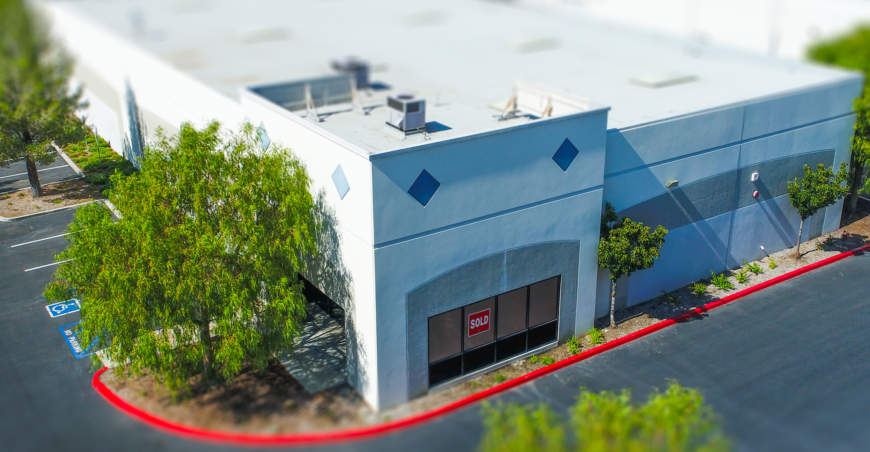
Commercial real estate transaction volume has started showing signs of improvement across several sectors, but one trend is becoming increasingly clear: smaller commercial real estate deals are moving far faster than large institutional transactions.
Across the country, private investors, family offices, physicians, owner-users, and local investment groups are actively buying smaller commercial assets while many institutional deals remain stuck in extended underwriting, financing reviews, or pricing negotiations.
The difference in transaction speed is becoming impossible to ignore.
In today’s environment, a $3 million medical office building or a $7 million neighborhood retail center may trade in a matter of weeks, while larger institutional office towers or portfolio deals can sit on the market for months. According to a recent report from Commercial Property Executive, smaller commercial real estate investments have continued attracting strong buyer activity as investors prioritize flexibility, manageable risk, and accessible financing.
Institutional Buyers Are Moving More Carefully
Institutional capital is still active in commercial real estate, but the process has become far more cautious than it was during the ultra-low-interest rate environment of 2020 and 2021.
Large institutional acquisitions now often involve:
- Multiple investment committee approvals
- More conservative underwriting
- Extended lender reviews
- Increased focus on tenant credit
- Stress testing for interest rates and vacancies
- Higher reserve requirements
Large funds are also facing pressure to justify acquisitions at current pricing levels while balancing investor expectations and debt costs. As a result, many institutional buyers are focusing only on top-tier assets in prime locations with long-term tenancy and strong fundamentals. Meanwhile, smaller private buyers can often make decisions much faster.
A physician group buying its own medical office building may not need layers of committee approvals. A local investor buying a retail strip center may already know the submarket and tenant base intimately.
That flexibility creates speed.
For related insight on how investors are adapting to today’s market, read:
- Commercial Real Estate in 2026: What Smart Investors Are Preparing for Now
- What Smart Commercial Real Estate Investors Are Doing Right Now
Financing Favors Smaller Transactions
Financing availability is another major reason for smaller deals moving faster. Regional and community banks remain active in lenders for smaller commercial real estate transactions, particularly when borrowers have strong financials or plan to occupy the property themselves.
CRE Daily mentioned that regional banks continue to play a critical role in driving smaller CRE transactions while larger institutional financing remains constrained.
Smaller transactions are often easier to structure because:
- Loan amounts are lower
- Borrowers are easier to evaluate
- Deals require fewer parties
- Local banks understand their markets
- Owner-user deals typically carry lower perceived risk
Compare that to a large institutional acquisition requiring syndicated debt, mezzanine financing, legal structuring, third-party consultants, and extensive due diligence. The difference in complexity alone can add months to a closing timeline.
Owner-Users Continue to Drive Demand
One of the strongest buyer groups in today’s market is the owner-user. Medical practices, dental groups, outpatient healthcare providers, legal firms, and professional businesses are increasingly choosing to purchase real estate rather than continue leasing long term. This trend has become especially noticeable within healthcare real estate.
Medical office condos and smaller medical office buildings continue seeing strong activity because healthcare operators value:
- Long-term occupancy control
- Stable operating costs
- Equity creation
- Brand presence
- Expansion flexibility
In many markets, owner-users are less focused on short-term cap rate movements and more focused on operational needs and long-term positioning. That creates a very active buyer pool for smaller healthcare assets.
Smaller Deals Have Better Price Discovery
Another reason smaller deals are trading more efficiently is because pricing expectations are often more realistic. Large institutional sellers are frequently still anchored to peak market pricing from prior years, while institutional buyers are underwriting higher cap rates, increased operating costs, and softer rent growth assumptions. That gap has slowed many large transactions. Smaller private sellers, however, are often more flexible and pragmatic during negotiations.
Additionally, smaller assets attract a wider buyer pool, including:
- Private investors
- Family offices
- 1031 exchange buyers
- Physicians
- Owner-users
- High-net-worth individuals
More buyers generally create more liquidity.
This is particularly true in sectors like:
- Medical office
- Neighborhood retail
- Industrial flex
- Small-bay industrial
- Office condos
According to GlobeSt., private capital has become increasingly dominant in smaller commercial real estate transactions as institutional activity slows.
Certainty Has Become a Competitive Advantage
In today’s market, certainty matters more than ever.
Sellers are prioritizing buyers who can:
- Close quickly
- Limit financing contingencies
- Put hard earnest money at risk
- Navigate due diligence efficiently
- Demonstrate operational experience
Smaller buyers often have an advantage because their acquisition structures are simpler. A local investor may already know the market, the tenant base, and operating costs. A physician group buying a medical condo may already have financing lined up before making an offer. That level of preparation can dramatically reduce transaction timelines. Institutional deals, on the other hand, often involve layers of approvals and legal reviews that slow momentum.
For additional perspective on how underwriting and operating expenses are impacting today’s market, read:
- Rising Insurance Costs Are Quietly Rewriting CRE Valuations
- Commercial Real Estate Debt Maturity Outlook
What This Means Moving Forward
The commercial real estate market is not frozen. Capital is still active. Deals are still happening. But the market has become far more selective.
Smaller commercial real estate transactions are benefiting from:
- Faster decision-making
- More accessible financing
- Strong owner-user demand
- Local market expertise
- Simpler deal structures
- Better pricing alignment
Institutional activity will likely continue recovering over time, especially as interest rates stabilize and lenders regain confidence. However, much of the current momentum in commercial real estate is happening in the small-to-mid-sized transaction space. For brokers, investors, and developers, understanding where liquidity is actually moving today is critical.
At ICRE Investment Team, we continue tracking commercial real estate trends across Arizona with a strong focus on medical office, owner-user opportunities, healthcare development, and investment sales throughout the Phoenix metro area.
To stay ahead of market trends, receive industry insights, and access future commercial real estate reports, sign up for our newsletter here: ICRE Newsletter Signup