

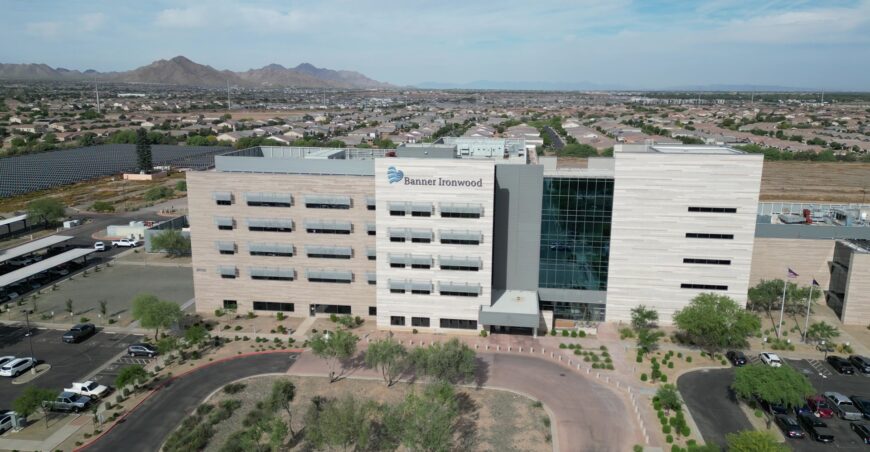
Population growth in the greater Phoenix area is driving a shortage of medical office space throughout the region and creating opportunities for commercial real estate investors to capitalize on the recent surge in medical real estate development.
Across the Phoenix metro area and throughout Arizona, communities are expanding faster than healthcare facilities can keep up. New residents are moving into suburban markets like Gilbert, Queen Creek, San Tan Valley, Peoria, and Goodyear, yet many of these areas still lack enough physicians, outpatient clinics, urgent care centers, specialty providers, and medical office buildings to adequately serve demand. This growing imbalance is creating major opportunities within commercial real estate, particularly in the medical office sector.
The result is increased demand for:
- Medical office buildings (MOBs)
- Outpatient healthcare facilities
- Ambulatory surgery centers (ASCs)
- Medical development land
- Healthcare investment properties
- Physician owner-user opportunities
For healthcare providers, the challenge is operational. For commercial real estate investors and developers, it has become one of the strongest long-term demand drivers in the market.
Arizona’s Population Growth Is Fueling Healthcare Expansion
Arizona continues to rank among the fastest-growing states in the country. As more people relocate to the state, healthcare systems are under pressure to expand services closer to where patients live.
The East Valley is one of the clearest examples of this trend. Communities surrounding Gilbert, Chandler, Queen Creek, and San Tan Valley have experienced explosive residential growth over the last decade. Healthcare providers are now racing to establish new facilities throughout these corridors to keep up with demand.
According to recent reporting on the East Valley healthcare boom, hospital systems and municipalities are actively planning long-term medical expansion strategies, including new patient towers, expanded emergency departments, additional surgical services, and large-scale medical office developments adjacent to major hospital campuses.
This growth is not just tied to hospitals. Much of the demand is shifting toward outpatient care and community-based healthcare delivery.
For additional insight into Arizona healthcare growth trends, read:
Mercy Gilbert Healthcare Real Estate: A Data-Backed Opportunity in an Undersupplied Market
The Shift Toward Outpatient Healthcare Is Reshaping CRE
Healthcare delivery has changed significantly over the past several years.
Patients increasingly prefer care that is:
- Closer to home
- Easier to access
- Lower cost
- Faster and more convenient
Because of this, healthcare systems are moving services away from traditional hospital campuses and into outpatient medical office environments.
Today, many procedures that once required hospital visits can now be performed in:
- Ambulatory surgery centers
- Specialty clinics
- Imaging centers
- Physical therapy facilities
- Urgent care centers
- Standalone medical office buildings
This trend has dramatically increased demand for modern medical office space throughout Arizona.
Unlike traditional office tenants, healthcare users often invest heavily into their spaces through specialized buildouts, imaging infrastructure, surgical equipment, and long-term operational commitments. As a result, medical office properties tend to experience:
- Longer lease terms
- Higher tenant retention
- More stable occupancy
- Stronger resistance to economic downturns
That stability has made healthcare real estate increasingly attractive to investors searching for defensive asset classes.
For more on evolving healthcare property trends, read: How Medical Real Estate Is Evolving
Healthcare Workforce Shortages Are Adding Pressure
Another factor contributing to healthcare supply gaps is workforce shortages.
Arizona continues to face shortages across multiple healthcare specialties, including physicians, nurses, behavioral health professionals, and primary care providers. According to healthcare workforce research, shortages are expected to continue increasing over the coming years as patient demand rises faster than provider supply.
This creates ripple effects throughout the healthcare system:
- Longer wait times for patients
- Increased travel distances for care
- Overloaded existing facilities
- Greater demand for decentralized healthcare access points
To address these challenges, providers are expanding into suburban markets where patient growth is strongest. In many cases, healthcare groups are prioritizing satellite offices and outpatient expansion strategies rather than relying solely on centralized hospital campuses.
That expansion directly fuels demand for medical office development.
Medical Office Buildings Continue to Outperform Traditional Office
While portions of the traditional office sector continue to face challenges from remote work and changing workplace trends, the medical office sector has remained comparatively resilient.
Recent Phoenix medical office reports showed:
- Positive net absorption
- Rising rental rates
- Continued leasing activity
- Increased investment sales volume
- Limited new construction inventory in key submarkets
Healthcare tenants still require physical locations to treat patients. Medical practices cannot operate virtually in the same way traditional office users can. Because of this, medical office properties continue to maintain long-term relevance within commercial real estate portfolios.
Additionally, development costs remain elevated, which has limited the pace of new supply entering the market.
This combination of:
- Strong demand
- Limited supply
- Population growth
- Healthcare expansion
- Outpatient migration
has created favorable fundamentals for medical office owners and developers throughout Arizona.
For additional market insight, download the latest:
Q1 2026 Phoenix MSA Commercial Real Estate Market Report
Why Location Matters More Than Ever
Not all medical office locations perform equally.
Healthcare providers increasingly prioritize locations nearby:
- Major hospital campuses
- Dense residential growth
- High-income demographics
- Major freeway access
- Underserved healthcare corridors
Areas surrounding hospital systems such as Mercy Gilbert Medical Center, Banner Gateway, Banner Ironwood, and other East Valley healthcare hubs continue to attract substantial healthcare-related development activities.
Medical users want to position themselves closer to patient populations while also benefiting from referral networks and healthcare ecosystem clustering.
This is one reason why medical-zoned land near major hospital campuses has become increasingly valuable throughout Arizona’s commercial real estate market.
Explore active healthcare development opportunities here:
- East Valley Healthcare Anchor – Gilbert, Arizona
- Rare Medical Development Land Minutes From Mercy Gilbert Hospital
- Introducing a Premier Medical Development Available Q2 2026
- Terraza Medical Village
- Mixed Use Office Medical & Retail Development at Shoppes & Offices @ San Tan Heights
The Long-Term Outlook for Arizona Healthcare Real Estate
The long-term fundamentals supporting Arizona’s healthcare real estate sector remain strong. Population growth, aging demographics, physician shortages, and the continued shift toward outpatient care are all contributing to sustained demand for medical office space.
At the same time, construction costs, entitlement timelines, and limited medical-zoned land supply continue to constrain new development. For investors, developers, healthcare operators, and physician groups, this creates a market environment where well-located medical office assets remain highly sought after.
The ICRE Investment Team continues to actively track healthcare real estate trends throughout Arizona, including medical office leasing activity, healthcare expansion corridors, and medical development opportunities near major hospital systems across the Phoenix metro area.
To stay ahead of Arizona healthcare real estate trends, market reports, medical office opportunities, and healthcare development insights, sign up for the ICRE newsletter at ICRE Newsletter Signup and follow the latest healthcare commercial real estate updates at ICRE Investment Team.